A First Version of Lead Your Time
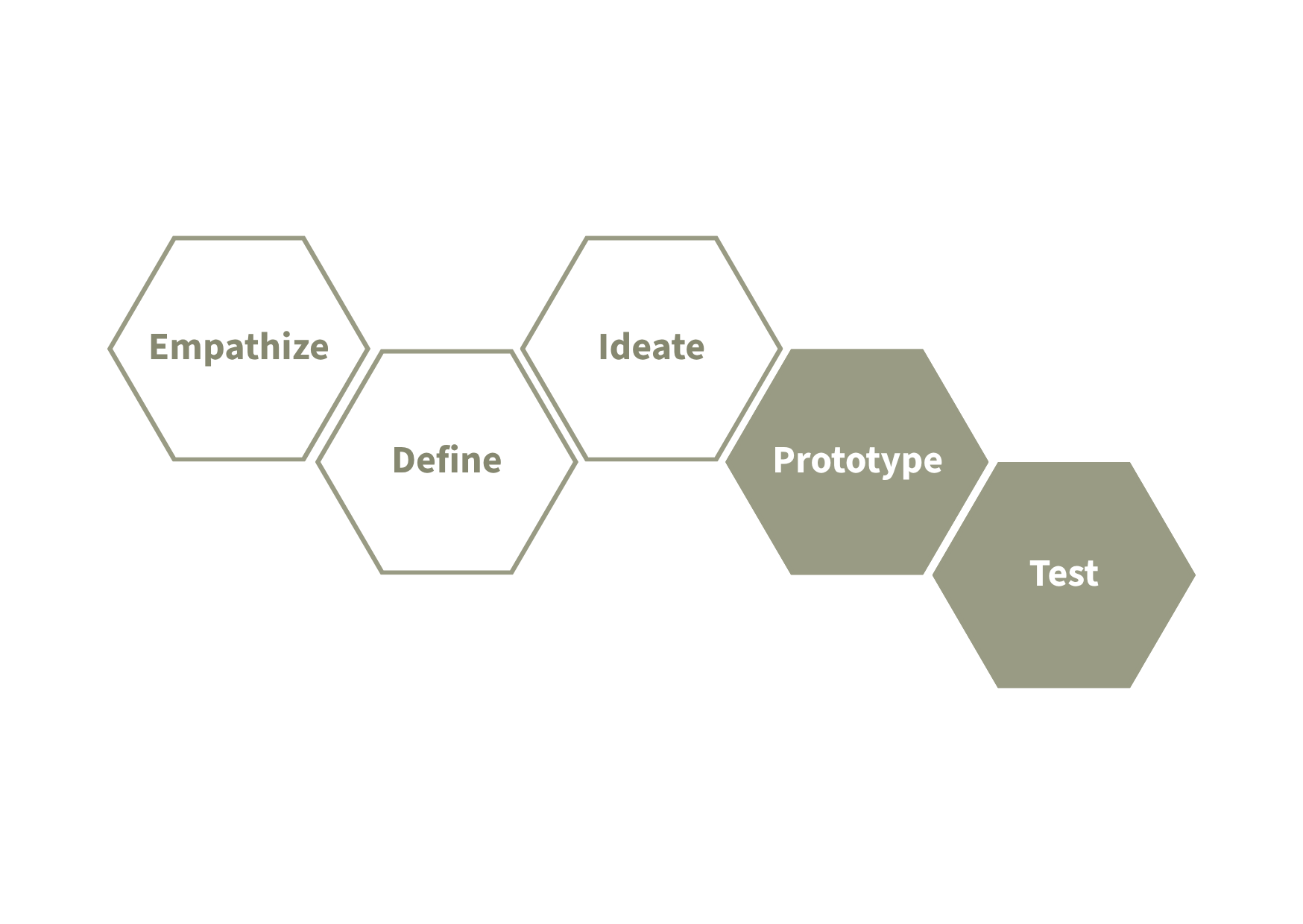
In this phase of the design process, I moved from design principles #2 to designing a prototype. The design idea grew out of one clear finding: time was the biggest pressure point.
The nonprofit leader was struggling with scheduling, too many commitments, and a habit of saying yes to almost everything. Other challenges also showed up, such as documents, emails, meetings, and stakeholder communication. But time felt like the right place to begin.
That is why the first version of the design focuses on time management as the entry point to self-leadership. When the leader can lead his time more intentionally, the rest of the leadership-learning ecology can grow from there.
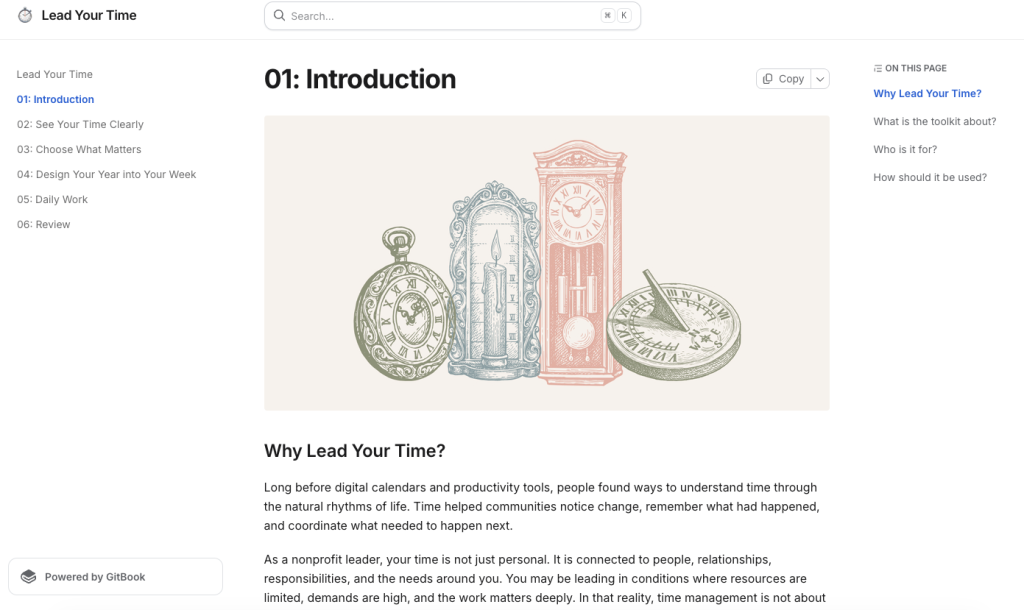
My prototype is called Lead Your Time. It is designed as a practical self-leadership toolkit for nonprofit leaders who wants to manage their time better. The toolkit is designed in a Gitbook format and consists of 6 sections:
01: Introduction │ What the toolkit is, who it is for, and how to get started
02: See Your Time Clearly │ Notice where your time and energy go during the week
03: Choose What Matters │ Set priorities, protect boundaries, and say yes/no with intention
04: Design Your Year into Your Week│ Turn long-term priorities into realistic weekly plans
05: Daily Work│ Plan your day with focus, structure, and simple start/end routines
06: Review│ Reflect on what you learned and choose what to keep using
The prototype currently consists of Introduction and See Your Time Clearly, with focus on time awareness. The following sections will be designed at a later stage after receiving input from the test workshop with the nonprofit leader. Each section of the toolkit follows the rhythm Notice → Experiment → Reflect → Integrate, inspired by Kolb’s experiential learning cycle:
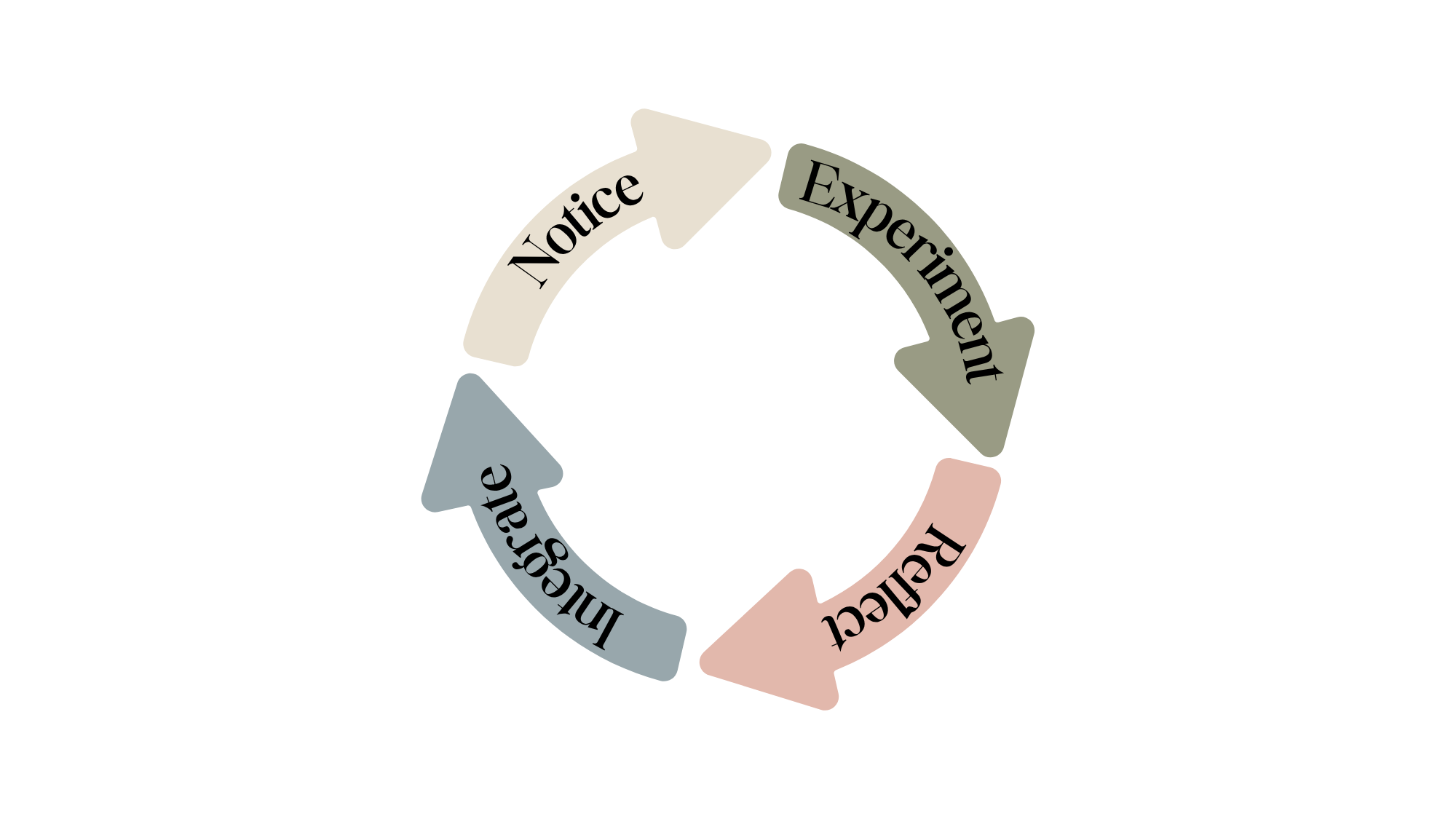
First, the leader notices how his time is currently being used. Then he tries one small tool or practice — analogue, digital, or both. Afterwards, he reflects on what the experience reveals about his habits, choices, and leadership. Finally, he keeps what is useful and turns it into a simple rhythm.
Design Choices
The design principles shaped the prototype in a very practical way. The toolkit is not built around one digital solution, but around a flexible mix of digital tools, paper templates, notebooks, reflection, and conversation. It gives support step by step, without assuming that the leader already knows how to use planning systems or productivity methods. The rhythm of each section helps the leader try one small practice, learn from it, and keep what is useful. Time management is therefore framed as part of self-leadership, not just as a way to get more tasks done. The prototype is also designed to fit real working conditions, including unstable internet and changing schedules, so the leader can use it online, offline, digitally, or on paper — depending on what works in his context.
Design Test
The Lead Your Time prototype was tested in a 60-minute Zoom workshop with the nonprofit leader, after he had used Section 02: See Your Time Clearly, for one week. The test combined interview, show-and-tell, guided walkthrough, and reflection. This helped me explore both how the toolkit worked in practice, and how the leader experienced using it in his everyday work.
The test showed that Section 02: See Your Time Clearly was clear, usable, and relevant to the leader’s everyday work. He could access the toolkit on both his phone and computer, and he found the instructions useful and easy to follow. During the week, he chose to try Experiment 1: Map Your Day, where he tracked his day on a paper clock template. He also adapted the tool in his own way. First, he used it to plan how he wanted the day to unfold. Later, he returned to the same template to compare the plan with what actually happened. This showed that the prototype was open enough for him to experiment with and make it his own.
For the next version, the toolkit should keep both structure and flexibility. The instructions need to stay simple and clear, but the tools should remain open enough for the leader to adapt them to his own working rhythm. The next step is therefore to build on this finding by developing the following sections, especially around prioritization, boundaries, and protecting focused work.

Skriv et svar
Du skal være logget ind for at skrive en kommentar.